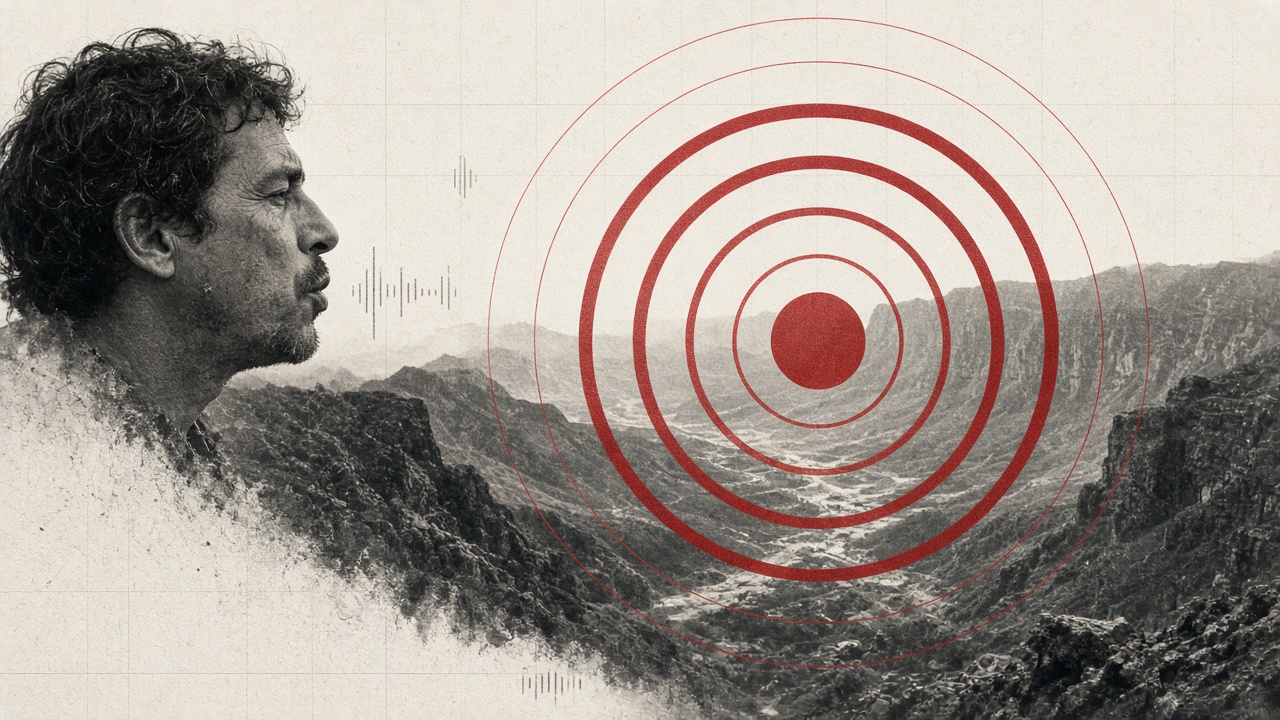
On La Gomera, in the Canary Islands, a shepherd can tell a neighbour across a ravine to bring the goats down before dark without raising a voice. Instead, he whistles. This is Silbo Gomero: ordinary Spanish, carried by a different instrument.
The island is slashed by deep valleys, and a walk from one side to the other can take an hour. A sharp whistle crosses the gap in seconds, which is exactly why the habit survived for centuries.
How do you whistle a vowel?
Whistlers keep the rhythm and melody of speech and turn sounds into changes of pitch. Vowels become higher or lower bands of tone, and consonants become rises, falls and breaks between them. It is not a code of fixed signals like a referee's whistle. In principle, whatever you can say, you can whistle.
The linguist Julien Meyer, who has recorded whistled speech in mountains and jungles around the world, describes whistlers swapping news, gossip and breakfast invitations. In north-east Turkey, villagers have whistled Turkish across steep valleys in much the same way.
Heritage, officially
UNESCO lists Silbo Gomero as Intangible Cultural Heritage of Humanity, and Turkey's whistled language sits on its list of heritage in need of urgent safeguarding. Mobile phones have done what ravines never could, so La Gomera now teaches Silbo in schools.
The lesson for anyone learning a language is oddly cheering. Meaning is sturdier than we think. A listener who knows the language well fills in the gaps, just as you can follow a friend on a terrible phone line. Your Year 9s, in other words, understand more than their blank faces suggest.